
|
Commissary Kitchens: What They Are, Who Needs One, and What They Cost
November 13, 2026

Food truck, mobile food business, and catering company operators need a professional-grade kitchen to prep and store ingredients, clean equipment, and manage production. However, not every new food-service owner has a dedicated, off-premises kitchen for high-volume prep. That’s where a commissary kitchen comes in! Learn more below.
What Is a Commissary Kitchen?
A commissary kitchen is a commercial food-preparation facility owners use when they don’t have their own space or the equipment they need on-site. Operators that benefit from off-site kitchen facilities include:
- Food trucks and mobile carts: Added space for prep, storage, and cleaning
- Caterers: Access to commercial equipment and storage for large orders and packing food for transport.
- Pop-up operators and market vendors: Extra kitchen space to prep food for festivals, markets, and temporary events.
How Much Does a Commissary Kitchen Cost?
Costs depend on location, equipment, storage, and usage. Some facilities charge hourly rates, while others offer monthly memberships or recurring rental agreements.
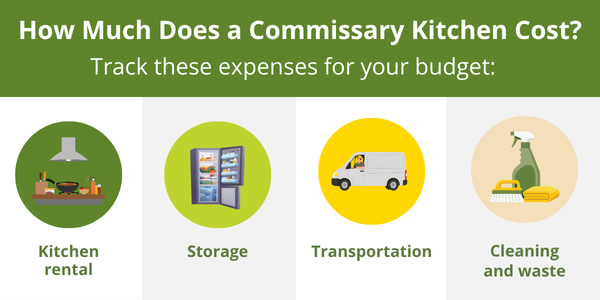
Track these expenses for your budget:
- Kitchen rental: Hourly or monthly fees based on usage
- Storage: Refrigerated, frozen, and dry space for ingredients and supplies
- Transportation: Fuel and labor for moving food between the kitchen and service locations
- Cleaning and waste: Disposal fees and facility charges
Request a full fee breakdown before committing. A closer kitchen may reduce transportation time and labor, even if rent costs more.
What’s the Difference Between a Commissary and Host Kitchen?
A host kitchen is an established restaurant kitchen that rents space or provides access to another food business. For example, a food truck operator might rent prep space from a restaurant during off-hours. The terms host kitchen and commissary kitchen can overlap, but they aren't always interchangeable.
- A host kitchen describes the shared-use arrangement
- A commissary kitchen generally refers to a facility that supports food business operations
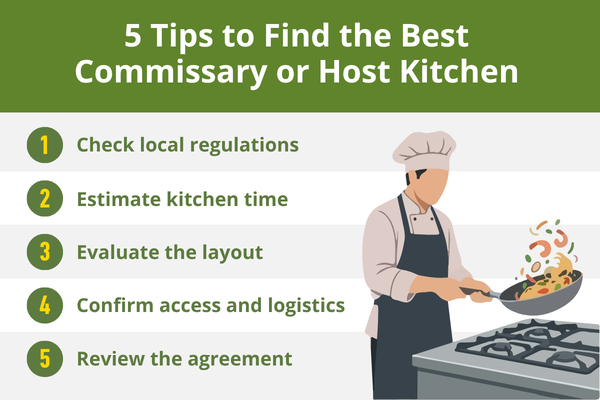
5 Tips to Find the Best Commissary or Host Kitchen
Choosing a kitchen is both an operational and a compliance decision. Look for regulatory approval, suitable equipment, reliable refrigeration, adequate storage, convenient access, and rental terms that fit the production schedule. Make sure the facility can handle the menu and expected volume, and follow these five tips:
- Check local regulations. Contact the local health department and relevant licensing authorities to confirm commissary requirements, permitted activities, and required documentation.
- Estimate kitchen time. Calculate how many hours the business needs to receive deliveries, prep ingredients, cook, pack orders, and clean.
- Evaluate the layout. Look for adequate refrigeration, dry storage, prep space, sinks, and equipment suited to the menu.
- Confirm access and logistics. Consider parking, loading areas, distance to customers, and whether kitchen hours match early-morning prep or late-night cleanup.
- Review the agreement. Understand rental terms, cancellation policies, shared-space rules, storage fees, and cleaning and maintenance responsibilities.
A kitchen that works for a small weekend food cart may not meet the needs of a growing catering operation. Choose a setup that supports current production without making future growth unnecessarily expensive.
Stock Your Food Truck and Catering Kitchen at US Foods CHEF’STORE
CHEF’STORE carries everything you need to execute flawless menus, no matter where your home-base kitchen is. From exceptional wholesale meat, seafood, and produce to eco-friendly to-go supplies, we carry everything you need at competitive prices.
Visit your nearby location to shop for ingredients and essentials, or check grocery delivery options to get the same great products sent to your kitchen.