|
Restaurant Inventory Audit: How to Find and Fix Cost Leaks
February 24, 2026

The first quarter shapes a restaurant’s finances for the year. By the middle of Q1, you have enough sales data to notice trends, but also enough time for minor inventory problems to grow into bigger cost leaks. Doing a mid-Q1 inventory audit helps you control costs, improve inventory management, and protect your profits before issues get out of hand.
Rather than a simple count, an inventory audit is a structured review of what you’re buying, how it’s being used, and where money may be slipping through the cracks.
How Often Should Restaurants Conduct Inventory Audits?
While a mid-Q1 audit is essential, inventory reviews should not be a once-a-year exercise. Best practice is to conduct weekly or biweekly counts of food and beverages, and monthly audits of non-food items. Regular audits allow operators to catch discrepancies early and adjust ordering based on real usage rather than assumptions. Frequent inventory audits create accountability, improve forecasting accuracy, and prevent small cost leaks from turning into major profitability issues.
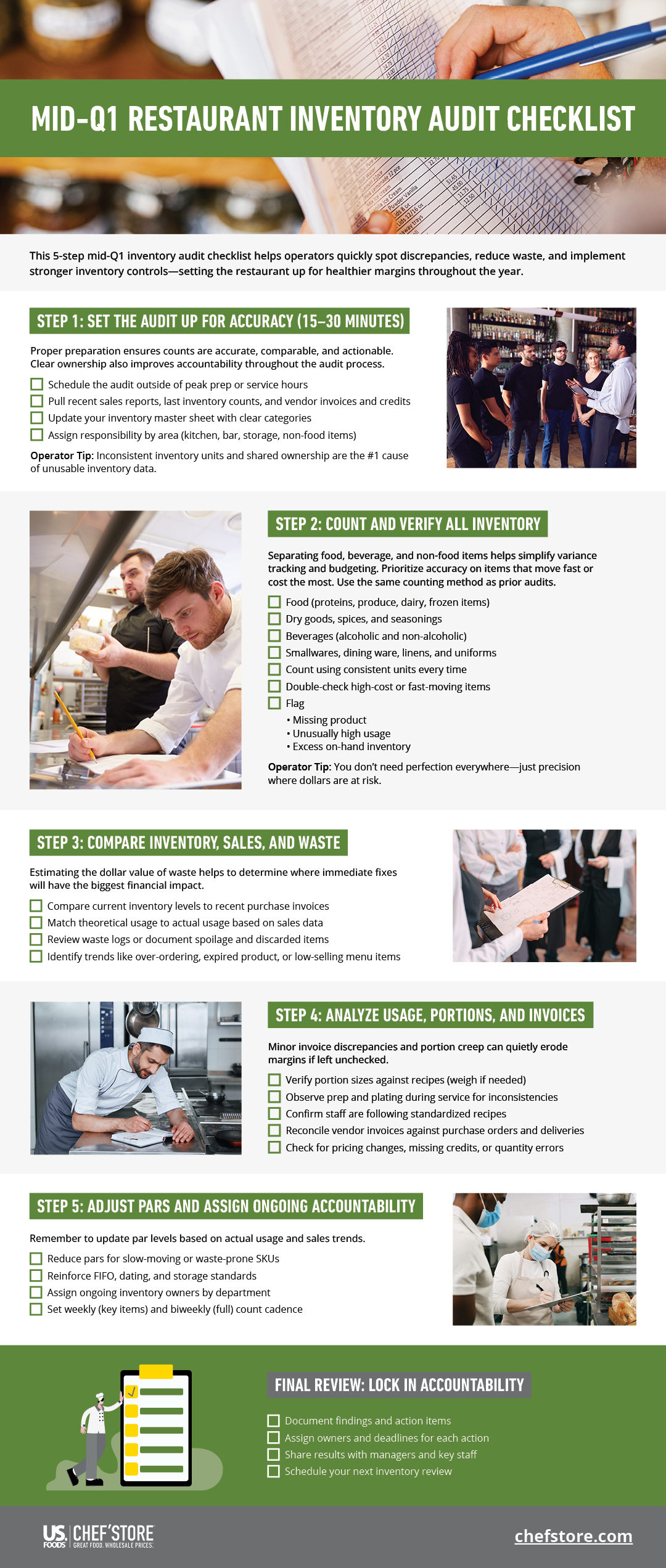
Here’s a step-by-step guide to help you find discrepancies, cut down on waste, and use better food cost control strategies for the rest of the year.
Step 1: Audit All Key Inventory Categories
A mid-Q1 audit should include every item you use each day. Even though menus and styles vary, most restaurants have similar main inventory categories, such as:
- Food
- Spices and seasonings
- Dry goods
- Beverages
- Dining ware
- Cooking equipment
- Linens and kitchen towels
- Employee uniforms
Keep food, beverage, and non-food items in separate sections on your inventory sheet. This makes budgeting and tracking changes much easier. As you audit, double-check your counts and note any items with higher use or loss than before.
Step 2: Track Waste to Identify Cost Leaks
Food waste costs restaurants $165 billion a year. However, it is an easily preventable source of lost profit.
- During your audit, compare purchase invoices with sales and remaining inventory to determine whether over-ordering or spoilage is occurring.
- Maintaining a detailed food waste log is critical. Recording what is being discarded, how often, and why helps operators spot trends such as low-selling menu items, improper storage, or overproduction.
Addressing these issues early supports long-term cost leak prevention and smarter purchasing decisions.
Step 3: Analyze Usage Patterns and Portion Control
A successful restaurant inventory audit analyzes usage. Review recipe yields, portion sizes, and prep procedures to ensure they align with theoretical food costs. If actual usage consistently exceeds expectations, the issue may stem from inconsistent portioning, insufficient training, or outdated recipes. Correcting these gaps helps stabilize cost of goods sold and improves overall food cost control.
Step 4: Reconcile Vendor Invoices and Pricing
Invoice discrepancies are a subtle but frequent cause of inventory-related cost leaks. During your audit, reconcile vendor invoices against purchase orders and inventory counts. Look for pricing changes, incorrect quantities, or missing credits. Even small errors can add up over time and erode restaurant profitability if left unaddressed.
Step 5: Update Par Levels and Assign Accountability
Based on audit findings, adjust par levels to reflect actual usage. Overinflated pars increase spoilage risk and tie up cash, while understocking leads to 86’d items and lost sales. Reinforce proper storage methods, such as First In, First Out (FIFO), to improve accuracy.
Assign specific team members responsibility for inventory in their areas, such as a chef for kitchen items or a bar manager for beverages. Doing so will promote consistency, accountability, and better inventory control across all categories.
Turn Audit Insights into Action with CHEF’STORE
Your inventory audit uncovered opportunities; now it’s time to capitalize on them. Stop into your local CHEF’STORE today to upgrade storage and restock inventory essentials. Get expert, in-person support from people who know your market and help keep your restaurant profitable year-round.
You’ll always find high-quality products at wholesale prices, conveniently located under one roof. Check out our online ordering options, too!
Click to Download the Full Version