


August 17, 2026
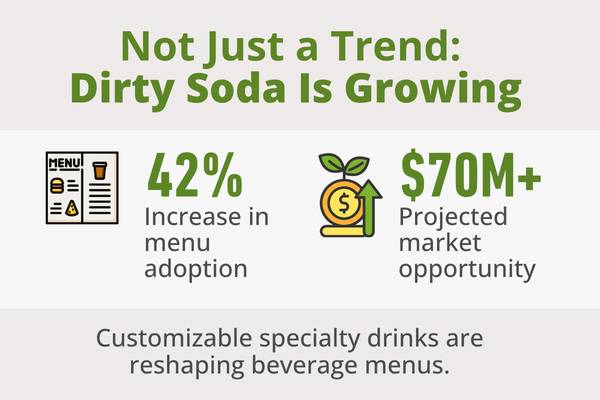
Dirty sodas are rapidly becoming a fixture on restaurant and beverage menus. It's clear that dirty soda isn't just a passing trend. Research shows that menu adoption has climbed by approximately 42%, with the market expected to surpass $70 million in the coming years.
Why? Consumers are looking for beverages that feel fun, customizable, and worth sharing. Dirty sodas check every box. With endless flavor combinations and mix-in options, these drinks have exploded on social media, attracting everyone from teens and families to customers looking for refreshing alcohol-free treats. For restaurants, cafés, drive-thrus, and quick-service concepts, dirty sodas offer an easy way to refresh the beverage menu while creating a high-margin upsell opportunity.
What is Dirty Soda?
Traditional Italian sodas combine sparkling water, flavored syrups, and a splash of cream to create a refreshing, lightly sweet drink. Today's dirty sodas take that concept even further by using virtually any carbonated beverage as the base.
Popular choices include Coca-Cola, Dr. Pepper, Sprite, Mountain Dew, root beer, ginger ale, sparkling water, or flavored club soda. The drink is then customized with flavored syrups, fruit purees, fresh citrus, or juice before being finished with cream. The result is a rich, fizzy beverage that's equal parts soda and dessert.
Part of dirty soda's appeal is its endless customization. Customers can mix and match flavors to create signature combinations or recreate popular recipes they've seen online. Restaurants can also develop house specialties that become destination menu items.
How to Make Dirty Soda
The standard recipe for a balanced dirty soda is:
Standard Dirty Soda for a 16oz drink
- 12 oz soda
- 1–2 oz flavored syrup (about 2–4 tablespoons)
- 1–2 oz cream (half-and-half, heavy cream, coconut cream, or coffee creamer)
- Ice
- Optional garnish: lime wedge, cherries, whipped cream, fruit slices
Basic Method
- Fill a 16 oz cup with ice
- Pour in the flavored syrup
- Add the soda
- Slowly pour in the cream
- Stir gently and serve
One of the biggest advantages of adding dirty sodas to your menu is how simple they are to prepare. Most restaurants already stock many of the necessary ingredients, making them an inexpensive addition with minimal training required.
Why Dirty Sodas Make Sense for Beverage Sales
Because they are built from inexpensive ingredients like canned soda, flavored syrups, and cream, they typically carry attractive profit margins while offering customers something that feels premium. Restaurants can also capitalize on limited, seasonal flavors by rotating syrups throughout the year.
- Strawberry lemonade in summer
- Caramel apple in fall
- Peppermint during the holidays
- Tropical citrus in spring
Specialty Drinks: A Simple Way to Refresh Your Beverage Menu
For restaurant operators, this growing demand presents an opportunity to stand out without investing in expensive equipment or complicated preparation. A handful of syrups, a few cream options, and creative recipes can transform ordinary options into a destination beverage menu.
As consumers continue seeking customizable, nonalcoholic drinks that deliver both flavor and visual appeal, dirty sodas offer restaurants a simple way to increase beverage sales, encourage repeat visits, and capitalize on one of the fastest-growing beverage trends.
Elevate Your Beverage Menu For Less
A well-crafted beverage menu can do more than complement your food. It can increase average check sizes, improve profit margins, and give guests another reason to return. CHEF'STORE helps you build a profitable beverage program with wholesale pricing on quality syrups, mixers, creamers, fresh ingredients, cups, and other beverage essentials.
Visit your nearest CHEF'STORE location or shop online for convenient pickup or delivery, and stock up on everything you need to serve high-margin drinks that work as hard as you do.